.webp)


.webp)

Moving is rarely just “move out on Friday, move in on Saturday.” For many families and homeowners, it’s a multi-step transition with loose ends: a closing that shifts, a renovation that isn’t finished, a new-build timeline that changes, or a temporary living situation that can’t fit an entire household. In those situations, the biggest challenge often isn’t lifting furniture or packing boxes. It’s staying organized while your belongings are in motion and your timeline is still settling into place.
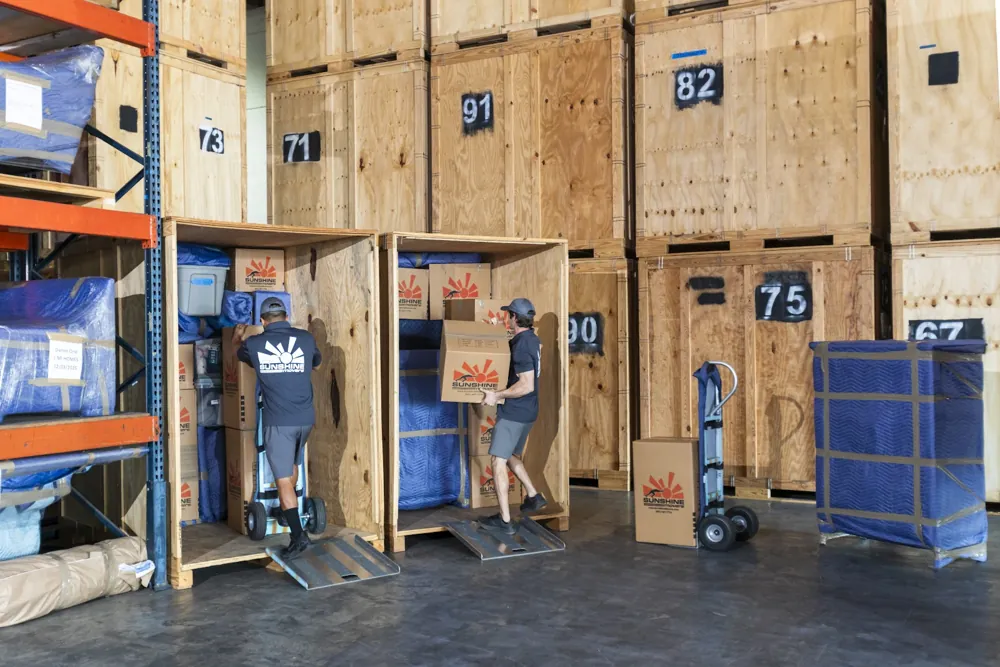
Household storage is one of the most practical tools for keeping a move organized. When used correctly, it acts like a buffer and a system at the same time. It gives you a safe place for your belongings to live between addresses, and it gives your move structure so you can stop improvising and start feeling in control again.
This guide explains what household storage is, when it’s needed, how access works, what “safe” should mean, and how storage can be organized so your move stays efficient rather than chaotic.
Why Organization Matters More Than Strength During a Move
Most moving stress comes from uncertainty. When you don’t know exactly when you’ll be in your new home, or you’re coordinating multiple rooms’ worth of belongings, it’s easy for the move to turn into a pile of boxes and decisions you can’t find your way out of. Organization is what prevents that. It reduces repeated handling, protects your time, and makes your new-home setup smoother.
Without a structured storage plan, many people default to a mix of temporary solutions. Some items go to a garage. Some go to a friend’s place. Some go into a storage unit you barely have time to arrange. Some stay packed in a moving truck overnight. The result is a move that becomes fragmented. You lose track of what’s where. You re-pack items because you can’t find what you need. You handle furniture more times than necessary. And the move starts to feel bigger every day instead of smaller.
Household storage works best when it’s treated as part of the moving plan, not a last-minute patch. When you know where everything is going, and you know how it will come back out, you gain a sense of control that makes the entire relocation feel more manageable.
What Is Household Storage?
Household storage is the storage of a home’s belongings—furniture, boxes, décor, appliances, and personal items—in a dedicated storage environment during a transition. It can be short-term or longer-term, depending on your situation. Some households use it to bridge a brief timing gap. Others use it during renovations or new construction delays. Downsizers may use it while deciding what fits in the next home. Families may use it while relocating to temporary housing.
It’s important to understand that “household storage” can describe different experiences depending on how it’s provided. Some people picture a self-storage unit where they manage everything themselves. Others use professionally managed residential storage, where storage is integrated with moving and logistics, and the same provider picks up, stores, and delivers belongings under one plan.
If your main goal is organization, the second model tends to work better because it reduces fragmentation. Instead of your belongings being spread across multiple locations and managed by multiple people, they remain under one coordinated process. That makes it easier to keep track of what you have, reduce handling, and plan for delivery.
When Is Household Storage Needed During a Move?
Household storage becomes useful whenever your timeline or space can’t comfortably support the full household all at once. The most common reason is a timing gap between move-out and move-in. Closing delays, lease overlaps, and new construction changes create gaps that can be a few days or several weeks. Storage lets you move out on schedule and move in when the home is truly ready.
Renovations are another major reason. Even when you’re staying in the home, you may need to clear rooms so contractors can work efficiently and safely. Furniture placed in “safe corners” has a way of getting moved repeatedly, collecting dust, and suffering minor damage over time. Storage keeps it protected and keeps your living environment more functional during the project.
Storage is also helpful when you’re staging a home for sale and want the space to feel open. Removing extra furniture, seasonal items, and overflow belongings can make a home look larger and more appealing, but those items still need a safe home until your next step is ready.
Downsizing creates its own form of timeline uncertainty. Many people don’t want to decide immediately what to keep, what to donate, and what to pass down. Storage gives you room to make thoughtful decisions without cluttering a new, smaller home.
Even moves that go “as planned” can benefit from storage if your new home needs cleaning, painting, flooring updates, or minor repairs before you unpack fully. Having a portion of the household stored temporarily can make it easier to settle in without living in a sea of boxes.
Can Items Be Accessed While They’re Stored?
Access is one of the first questions families ask, and the right answer depends on the type of storage you choose. With self-storage, access is typically customer-managed, which means you can come and go as you wish. That can be convenient, but it can also create a hidden problem: frequent access often leads to repeated rearranging, shifting stacks, and more handling, which increases damage risk and reduces organization over time.
With professionally managed household storage, access is usually controlled. Instead of treating storage like a unit you constantly revisit, it’s designed to keep items protected and stable until delivery. This model is often preferred when the goal is a smoother move and less uncertainty. It reduces the temptation to “run by and grab one thing,” which often turns into moving ten things and losing track of what went where.
If you expect to need frequent access to certain items, the best approach is often to plan ahead by setting aside essentials and keeping them with you. Think of it as an “open first” category: daily needs, important documents, medications, kids’ items, and a few comfort essentials. That way, storage stays a stable system rather than a constantly shifting puzzle.
Is Household Storage Safe?
Safety in household storage has two layers: security and protection from damage. Security is about access control and accountability. Protection is about handling, environment, and how items are stored.
A truly safe household storage plan limits unknown access and keeps responsibility clear. Many people don’t realize how quickly accountability becomes blurry when multiple parties are involved. If you move items into a public-access facility and then you, friends, and helpers access the unit over time, it becomes difficult to know what happened if something is scratched, lost, or damaged. That uncertainty creates stress, especially when you’re already juggling a move.
Protection from damage matters just as much. A move often becomes less safe when storage introduces extra handling steps. If the storage plan requires moving into a unit and moving out again later, you’ve doubled the loading and unloading events. Each event adds risk. This is why integrated moving and storage can feel safer: it reduces touchpoints and keeps the process controlled.
In Florida, the storage environment also matters. Heat and humidity can affect wood furniture, upholstery, leather, documents, and electronics over time. If storage might last longer than expected, it’s worth thinking about environmental stability as part of “safety,” not just a nice add-on.
How Is Household Storage Organized?
Organization is not just about labels. It’s about having a system that supports retrieval, delivery, and peace of mind. A well-organized storage experience begins before anything leaves your home. The most organized moves have a clear plan for what is being stored, what is being delivered immediately, and what stays with you during the transition.
During packing, organization starts with grouping by room and by priority. Even if boxes are sealed, knowing that all kitchen items are packed together and all bedroom items are packed together makes delivery day smoother. It reduces frantic searching and helps you set up the home in a logical order.
At intake, organized storage becomes about visibility. When items are inventoried and tracked as they enter storage, it reduces uncertainty. You’re not relying on memory alone. You’re not guessing whether a particular box is in a back corner. Inventory awareness supports accountability and makes redelivery more predictable.
Organization also depends on how the storage environment is managed. In a controlled storage process, items remain stable and protected rather than being constantly reshuffled by repeated customer access. The more stable the storage environment is, the easier it is to maintain organization over time.
Finally, organization is reinforced through delivery planning. When you know when items will be delivered and in what general order your home will be set up, storage stops feeling like “everything is gone” and starts feeling like “everything is staged for the next step.”
How Household Storage Prevents the “We Moved, But We’re Still Living in Boxes” Feeling
Many families reach a point after moving where they feel stuck. The house is technically theirs, but it doesn’t feel livable because every room is piled high and nothing is easy to find. Household storage can prevent that by letting you phase the move. Instead of bringing everything in at once, you can keep some items stored while you set up essentials and get the home functional.
This is especially helpful for families with children, busy work schedules, or anyone moving into a home that needs light updates before fully settling. Storage gives you space to breathe. It turns unpacking into a manageable process rather than an overwhelming weekend of chaos.
It also helps if your home layout is changing. A new space may have different storage, different room uses, and different furniture placement needs. Having some items stored temporarily can give you time to decide what fits where without living around piles of furniture and boxes.
The Organized Move Is the One That Plans for the In-Between
Moves don’t fall apart because people forget tape. They fall apart because timelines change, storage becomes an improvised afterthought, and belongings get scattered across too many places. Household storage solves that by giving your move a structured middle step. It keeps everything contained, protects your belongings, and makes delivery smoother when your home is ready.
If your move involves a closing gap, a renovation, a phased transition, or simply the desire to stay organized while relocating, household storage can be the difference between feeling overwhelmed and feeling in control. The key is treating storage as part of your moving plan rather than a last-minute scramble. When the storage process is organized, the move becomes organized too—and that’s what makes a relocation feel seamless.
Contact Sunshine Movers for your Storage Needs


