.webp)


.webp)

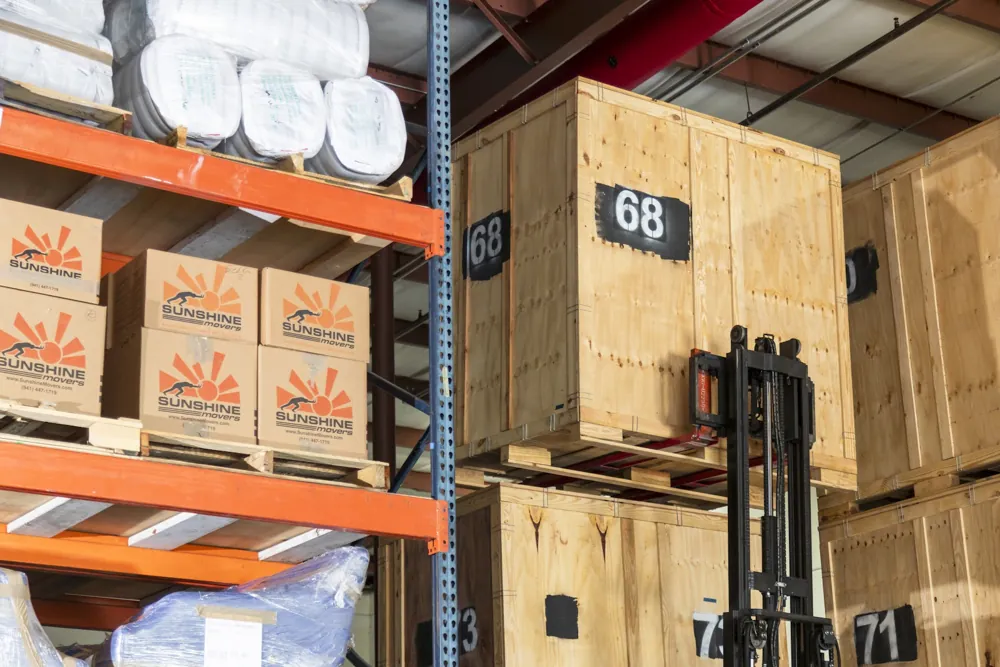
When a business relocates, the biggest cost is rarely the truck. It’s downtime. It’s missed meetings, slowed productivity, delayed openings, and teams trying to work around boxes and half-assembled workstations. Commercial moves are different from residential moves because every day of disruption has a price tag. That’s why more businesses search for commercial moving and storage as a combined solution instead of treating storage as a separate task they’ll “figure out later.”
A full-service commercial moving and storage plan is designed to keep your relocation organized, flexible, and accountable from the first pack to the final setup. It helps when move-out and move-in dates don’t align, when buildouts run late, when furniture arrives before the space is ready, or when you need to phase the move over multiple days. Instead of forcing your business into a tight window, combined moving and storage creates a controlled middle step so you can keep operations moving while your space transitions.
This service guide explains how commercial moving and storage works, when office relocation storage is helpful, how businesses use warehouse storage for furniture and equipment, what “secure” storage should look like, and whether installation can be handled as part of the plan.
Why Businesses Choose Combined Commercial Moving and Storage
Commercial moves are almost always tied to a timeline you can’t fully control. Leases end on fixed dates. Contractors miss milestones. Permits take longer than expected. IT installation schedules shift. New furniture arrives early or late. Even a well-managed office relocation can have unpredictable gaps, and those gaps are where moving and storage working together becomes invaluable.
When storage is not integrated into the move, businesses often end up improvising. Furniture gets stacked in hallways. Inventory ends up in back rooms that aren’t designed for storage. Workstations are disassembled and reassembled multiple times. Teams spend hours coordinating access to a self-storage unit that isn’t built for commercial flow. Accountability becomes messy because multiple vendors touch the same assets. The move becomes fragmented, and fragmentation is what creates disruption.
A combined commercial moving and storage approach prevents that by creating one plan. One chain of custody. One schedule that can flex. Your move-out can happen on time, your items can be stored safely, and your move-in can happen when the space is ready without forcing your business into a rushed, high-risk shuffle.
For offices, the benefits are immediate. You can move in phases, store what isn’t needed right away, and keep critical operations running without drowning in clutter.
What Commercial Moving and Storage Includes
Commercial moving and storage typically combines relocation services with professionally managed warehouse storage designed for business assets. In practical terms, that means your furniture, fixtures, equipment, files, and inventory can be picked up, transported, stored, and delivered based on your project timeline.
A true combined solution is built around planning. The process starts with understanding your schedule, your constraints, your building requirements, and your operational priorities. From there, a coordinated moving plan is created that accounts for what needs to move first, what can be stored, and what needs special handling.
Commercial storage is often used for office furniture, modular systems, conference room sets, reception furniture, fixtures, and equipment. In many projects, this overlaps with FF&E handling, which refers to furniture, fixtures, and equipment stored and managed in a way that supports construction and installation milestones.
The goal is not simply to move items from one address to another. The goal is to keep your business organized during the transition and protect assets so they arrive ready to be used.
Office Relocation Storage: The Most Common Use Cases
Office relocation storage is especially helpful when the move is happening faster than the buildout. This is a common scenario when a new space is under construction, waiting on final inspections, or still receiving finishes and furniture installation. The old lease is ending, but the new space isn’t ready for full occupancy. Storage becomes the bridge.
Storage is also useful when you’re relocating in phases. Many businesses prefer to move departments in stages to reduce disruption. Some teams move first. Others remain operational until the new space is fully functional. In this model, storage helps you keep nonessential items out of the way while the new office is being set up.
Another frequent use case is furniture and equipment arriving before the office is ready. This happens with new purchases, vendor deliveries, or project schedules that shift. Instead of cluttering a partially finished space or risking jobsite damage, items can be received, protected, and stored until installation day.
Storage is also common during office renovations. If you’re updating flooring, painting, adding walls, or changing layout, storing furniture off-site keeps your team safer, protects the assets, and allows contractors to work more efficiently. Clearing space speeds the project and reduces accidental damage.
Do Movers Provide Storage for Businesses?
Yes—many commercial movers provide storage, and it’s often one of the most valuable parts of a full-service plan. The key is understanding what kind of storage is being offered and how integrated it is with the move.
Some providers simply transport items to a third-party storage facility. In that case, your business may still be managing access, logistics, and responsibility across multiple vendors. Other providers operate their own warehouse or manage storage directly as part of their logistics system. That integrated model typically delivers a smoother experience because chain of custody stays clearer and the move remains one coordinated plan.
For businesses, clarity matters. Your office furniture and equipment represent real value, and the more vendors touch them, the harder it becomes to keep accountability clean. A commercial moving and storage solution works best when storage is handled as part of the same professional process from pickup through final delivery.
Can Offices Store Furniture and Equipment Safely?
Yes, office furniture storage is one of the most common reasons businesses use commercial warehouse storage. Desks, chairs, workstations, cubicles, conference tables, filing systems, reception furniture, and fixtures can all be stored safely when they are handled professionally and stored in a controlled environment.
Safety depends on two things: the environment and the process. The environment should be secure and controlled. Access should be limited. Monitoring and oversight should be present. The process should minimize unnecessary handling and protect surfaces and components during movement and storage.
Office furniture is often damaged not because it sits in storage, but because it is handled too many times or stored poorly. Tight stacking, repeated disassembly, missing hardware, and rushed loading can create scratches, dents, broken parts, and lost components that slow reinstallation later. A commercial storage plan that is designed for offices focuses on organization, stable placement, and professional protection so furniture comes back ready for use.
Equipment can also be stored safely when proper preparation and controlled custody are in place. The main goal is to protect business assets from unnecessary exposure, repeated movement, and unclear access that can create both security and condition issues.
How Long Can Commercial Storage Be Used?
Commercial storage can be short-term or long-term depending on your project schedule. Some businesses need a few days of storage to bridge a weekend move and a delayed occupancy date. Others need weeks or months while a buildout completes or while a renovation unfolds in phases.
The most important feature of commercial storage is flexibility. Project timelines often change, and your storage plan should not become a bottleneck. If construction takes longer, your storage should be able to extend without forcing you into extra moves. If your move-in date moves sooner, delivery should be able to adjust accordingly.
This is particularly important for FF&E projects, staged deliveries, and phased relocations. Storage is not just “holding.” It’s part of the timeline. When storage is managed professionally, it supports your milestones rather than creating new problems.
Is Commercial Storage Secure?
Security in commercial storage should be viewed as both physical security and accountability. Physical security includes controlled access and monitoring. Accountability includes clear chain of custody and inventory awareness, so your business assets are not treated like anonymous items that disappear into a facility.
A secure commercial storage environment limits who can access storage areas. Monitoring helps, but access control is often the bigger factor because it reduces the number of unknown interactions. Businesses storing equipment, files, inventory, or high-value furniture typically prefer storage that is managed and controlled rather than open to public traffic.
Security also includes protection from damage. A storage plan that reduces handling points and keeps items stable will lower the risk of condition issues. For offices, that can mean fewer scratches on desks, fewer broken components, and fewer missing parts when it’s time to reinstall.
When evaluating any commercial moving and storage provider, it’s smart to ask how storage access is controlled, how items are tracked at intake, and how the provider maintains accountability from pickup through final delivery.
Do You Handle Installation and Setup?
Installation can be part of a full-service commercial moving plan, depending on the scope and the services offered. Many businesses need more than transport. They need the new office functional quickly. That often includes staging deliveries, placing furniture, setting up work areas, and coordinating the sequence so departments can resume work with minimal downtime.
Office moves frequently involve disassembly and reassembly of modular systems, workstations, and conference setups. A well-managed move plans for these details so the space isn’t filled with furniture pieces that can’t be used. Installation planning also reduces the chance of missing parts and helps keep the move organized.
If your relocation includes FF&E elements, installation becomes even more important. Receiving, storing, delivering, and placing furniture and fixtures should align with project readiness. A storage plan that supports scheduled delivery and placement helps keep the buildout moving and reduces the chance of assets being damaged on-site before the space is complete.
The best approach is to treat installation as a planned phase, not a last-minute scramble. When it’s coordinated with storage and delivery, businesses experience less downtime and a smoother transition.
A Business Move Should Feel Like a Transition, Not a Shutdown
Commercial relocations don’t have to derail your operations. The smartest office moves are the ones built around continuity: a plan that protects your assets, supports your timeline, and keeps your team productive while the space changes. Commercial moving and storage creates that continuity by combining relocation and secure storage into one coordinated workflow.
If your business is facing a lease deadline, a buildout delay, a renovation phase, or a multi-site transition, storage can be the difference between chaos and control. A combined solution helps you move on time, store safely when needed, and deliver and install when your new space is truly ready. For businesses that want minimal disruption and maximum accountability, integrated commercial moving and storage is the practical path forward.
Contact Sunshine Movers for your Storage Needs


