.webp)


.webp)

Storing furniture between two moves sounds simple until you’re actually living it. One home is closing sooner than expected. The new place isn’t ready yet. A renovation timeline shifts. A lease ends before the next one begins. And suddenly you’re trying to solve a very specific problem: you need your household out of one space, but you don’t have a permanent place to put it.
This in-between stage is where people feel the most hesitation. It’s not because storage is rare. It’s because the “between” creates fear of double-handling and damage. Most homeowners and downsizers aren’t worried about furniture sitting still. They’re worried about how many times it has to be lifted, loaded, unloaded, stacked, restacked, and moved again before it finally lands in the right room. And in Florida, there’s another layer to think about: heat and humidity can quietly affect furniture if storage conditions aren’t controlled.
If you’re searching for residential storage or moving and storage right now, you’re likely close to making a decision. You just want to know what to watch for before you commit. This guide walks through the key things to understand before storing furniture between two moves, how to avoid the most common problems, and what a professional storage plan should feel like when the timeline is uncertain.
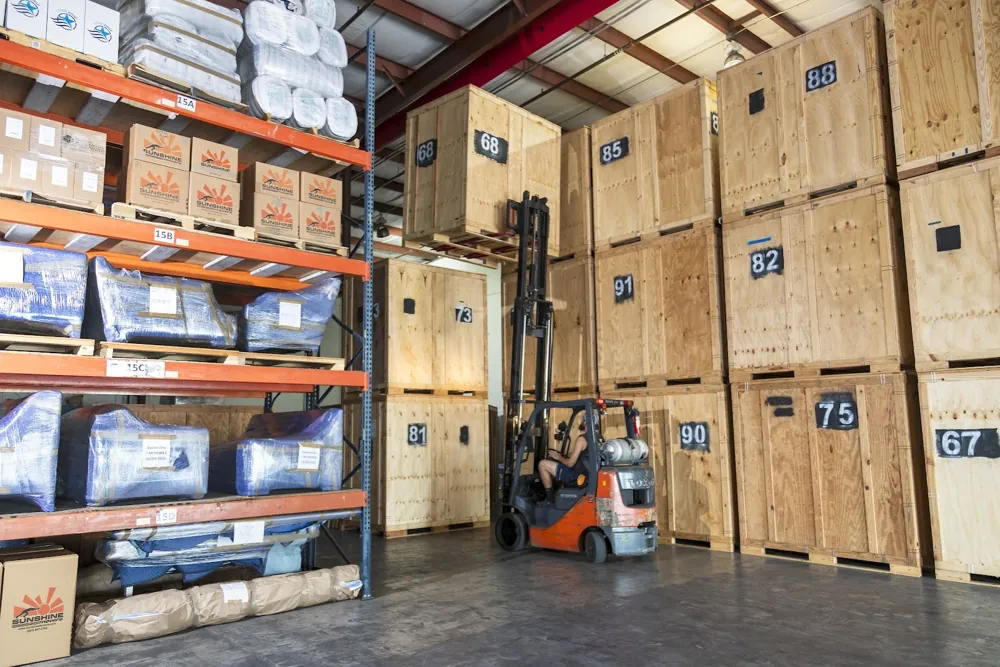
Sunshine Movers provides professionally managed, secure warehouse storage as an extension of moving and logistics services. This is not self-storage. There are no drive-up units and no customer-access storage. Your belongings remain under Sunshine’s chain of custody from pickup to storage and final delivery, which is exactly what reduces risk during a two-move transition.
Why “Between Two Moves” Is Where Damage Usually Happens
If you’ve heard a friend say, “Everything was fine until storage,” it’s usually not the storage building that caused the issue. The trouble typically comes from the extra handling events that storage can create. A traditional DIY plan often looks like this: you move out, unload into a unit, then later load out again for move two. That means your furniture experiences more touches, more tight turns, more stacking decisions, more chances to scrape a wall or catch a corner, and more opportunities for a “small accident” that becomes permanent.
This is why the best storage plan between two moves is the one that reduces complexity. Fewer handoffs. Fewer transfers. Fewer times your belongings have to be lifted and repositioned. The goal isn’t just “somewhere to put it.” The goal is to keep it protected and stable until delivery day.
That’s the core difference between personal storage units and professionally managed residential storage. Self-storage can work for some situations, but it’s often not the most protective option for a household transition because it typically requires more effort on your end and more movement of your furniture overall. Managed warehouse storage, on the other hand, is designed to keep your belongings under one company’s control from start to finish, which naturally reduces those risky touchpoints.
When Should Storage Be Arranged?
The best time to arrange storage is earlier than you think, especially if there’s any uncertainty in your timeline. The most stressful storage situations happen when the move-out date is fixed and the move-in date is not. That can occur with delayed closings, new construction, renovations, or landlord turnover. When people wait until the last week, they often end up choosing a storage solution based on what’s available rather than what’s safest.
Planning storage early doesn’t require knowing the exact delivery date. It simply means building flexibility into your move plan. When storage is integrated with moving and logistics, you can often schedule pickup on the date you need to be out, place items into storage, and then schedule redelivery once the new home is ready. This reduces pressure, because you’re not trying to coordinate storage, labor, and transportation as separate services at the last minute.
For downsizers and relocators, early planning is especially helpful because transitions often involve multiple deadlines at once: selling, buying, traveling, temporary housing, or coordinating family help. The more moving parts you have, the more valuable a single moving and storage partner becomes.
What Items Should Not Be Stored?
Most household items can be stored safely when they’re prepared and stored correctly, but there are a few categories of items that generally don’t belong in long-term storage. Perishable foods are an obvious one, and anything that can spoil, attract pests, or create odors should be kept out of storage. Certain hazardous or flammable items may also be restricted depending on the facility and safety rules. Plants and living items don’t belong in storage either, because they’re not designed to survive sealed environments.
The broader principle is this: if something can leak, spoil, attract pests, or create contamination, it shouldn’t go into storage. Even if your intent is short-term storage, delays can stretch longer than expected, and items that seem fine “for a week” can become problems over time. For sensitive valuables like important documents, passports, medications, or items you need immediate access to, it’s also smart to keep those with you rather than packing them away.
If you’re unsure about specific items, a professional moving and storage provider can walk you through what is appropriate to store and how to prepare it safely. The goal isn’t to make storage complicated. It’s to prevent avoidable issues during a transition.
How Is Access Handled While Items Are in Storage?
This is where residential storage can mean very different things depending on the provider. In typical self-storage, access is customer-managed. You drive up, unlock your unit, and come and go as you wish. That style of access can be convenient, but it also increases the amount of handling and rearranging that happens during the storage period, and it usually shifts responsibility to the customer once access is granted.
Sunshine Movers’ storage model is different by design. Sunshine Movers offers professionally managed warehouse storage with controlled access, not a self-storage unit. There are no drive-up units and no customer-access storage areas. Warehouse access is limited to authorized personnel only, with camera monitoring throughout. Items are inventoried upon intake, and Sunshine maintains chain of custody from pickup to storage and final delivery.
For customers storing furniture between two moves, this controlled model is often a relief. It removes the worry of unknown access and reduces the temptation to repeatedly open storage and “grab one thing,” which often leads to shifting stacks and increased damage risk. Instead of thinking of storage as a place you manage, think of it as a professionally managed holding period in your move plan. Your job becomes coordinating pickup and redelivery, not navigating hallways and restacking furniture.
What Causes the Most Problems Between Moves?
The biggest problems between moves usually come from three sources: extra handling, environmental exposure, and unclear accountability. Extra handling happens when the storage plan requires multiple load and unload cycles, especially through ramps, elevators, and narrow hallways common in personal storage units. Those environments create more touchpoints where furniture can be scraped, bumped, or dropped, and the repeated movement increases risk even when everyone is trying to be careful.
Environmental exposure is a major factor in Florida. Heat and humidity can affect wood furniture, upholstery, leather, artwork, documents, and electronics over time. Musty odors, swelling, warping, and moisture damage aren’t always immediate, but they become more likely as storage duration increases or when conditions fluctuate. This is why many homeowners prioritize climate controlled storage as part of their residential storage plan, especially when they don’t know how long the gap between moves will last.
Unclear accountability can also create stress. If multiple vendors handle your belongings, or if the moment you receive a key or access code the provider’s responsibility effectively ends, it becomes difficult to know who is accountable if something goes wrong. Between two moves, the last thing you want is a blurred handoff. You want one company responsible from start to finish.
That’s the value of integrated moving and storage. It keeps the process simple and reduces the opportunities for both damage and confusion.
How Can Damage Be Avoided During Storage Between Moves?
Damage prevention starts with a simple idea: reduce touchpoints and increase protection. The more times furniture is handled, the more risk you take on. A storage plan that keeps belongings under one company’s custody from pickup through storage and final delivery dramatically reduces those risks because it avoids the extra “middle move” into and out of a self-storage unit.
Proper protection also matters. Furniture should be professionally prepared before storage, and pad-wrapping is one of the best ways to protect finishes, edges, and surfaces. Sunshine Movers’ storage process keeps furniture professionally pad-wrapped, which is a major differentiator from DIY storage where pads are often removed, rented separately, or avoided. When furniture remains protected throughout the storage period, it’s less vulnerable to scuffs, dents, and abrasion.
Another overlooked factor is how items are moved into storage. Sunshine Movers’ warehouse advantage includes dock-level loading, where trucks pull directly onto a loading dock and items move straight from the truck into the warehouse. This reduces long carries, ramps, elevators, and narrow corridors that increase handling risk. Fewer touches means less risk and a faster, safer intake process.
Finally, a controlled-access environment helps prevent damage by reducing unknown interactions. Sunshine’s warehouse access is limited to authorized personnel, and camera monitoring supports security throughout. Controlled access isn’t only about theft prevention—it also reduces the everyday traffic and accidental contact that can happen in public-access environments.
The Safest “Between Moves” Plan Is the One That Feels Like One Move
Storing furniture between two moves doesn’t have to feel like you’re managing a separate project. The safest, least stressful option is the one that reduces handling, keeps conditions stable, and maintains clear accountability. That means thinking beyond personal storage units and choosing a storage solution designed as part of professional logistics.
Sunshine Movers offers residential storage and moving in Sarasota through professionally managed, secure warehouse storage. There are no drive-up units and no customer-access storage areas. Your belongings remain pad-wrapped and protected, inventoried on intake, stored in a controlled environment with limited access, and kept under Sunshine’s chain of custody from pickup to final delivery. If your move involves a timing gap and you want a plan that reduces double-handling and damage risk, Sunshine Movers can help you store once and deliver once—smoothly, safely, and on your timeline.


