.webp)


.webp)

Office relocations and renovations are rarely simple. Even when the new space is ready on paper, the reality can include shifting contractor timelines, elevator reservations, limited loading access, IT setup delays, and last-minute changes that affect when furniture can actually be installed. For office managers and facility teams, the biggest challenge isn’t just moving desks and chairs. It’s managing furniture, fixtures, and equipment in a way that keeps operations running and prevents costly damage or downtime.
That’s why office furniture storage paired with FF&E handling has become a go-to solution for smooth business moves. Instead of treating storage as a separate task—like renting commercial storage units and hoping everything fits—FF&E-style storage supports the move as a logistics plan. Furniture is picked up, protected, stored securely, and delivered when the space is ready. The goal is to create a controlled middle step that keeps your assets safe and your project timeline flexible.
This service guide explains what office furniture storage is, how pickup and delivery work, whether installation can be included, what “secure storage” should look like for business assets, and how short-term storage can support tight timelines without turning your relocation into chaos. If you’re searching for business storage near me because your move is approaching fast, you’re likely looking for an answer that is both practical and reliable. This is that roadmap.
What Office Furniture Storage Actually Means
Office furniture storage is the secure, organized storage of office furnishings during a relocation, renovation, or phased project. It typically includes workstations, desks, chairs, conference tables, filing systems, reception furniture, shelving, and common-area pieces, along with related components like panels, hardware, and modular parts that are easy to lose if the move isn’t managed carefully.
The difference between basic storage and true office furniture storage is the process. With generic commercial storage units, you’re often managing the layout, stacking, access, and ongoing organization yourself. That can work for simple overflow needs, but it can become risky during an active office transition. Office furniture is designed to be used daily, not to be moved repeatedly. Each extra handling event raises the chances of scratches, dents, broken pieces, and missing components.
FF&E handling adds structure to the storage stage. FF&E refers to furniture, fixtures, and equipment, and in commercial projects it often includes not just furniture but also items like lighting, décor elements, fixtures, and certain types of equipment that must be stored safely until installation day. When storage is handled with an FF&E mindset, items are treated like business assets that must be protected, tracked, and returned in usable condition—not just “stuff in a unit.”
Why Office Moves and Renovations Need a Storage Plan
Businesses rarely move in one clean sweep. Many relocations are phased to reduce disruption. Departments move at different times. Equipment and furniture must remain usable until the last possible moment. The new space may be ready for occupancy but not fully ready for installation. Or the old lease ends before the new space is complete.
Renovations create similar pressure. Furniture needs to be removed so contractors can work efficiently and safely, but the business still needs to function. Some teams work remotely, others remain on-site, and furniture has to be stored in a way that allows a smooth return when the space is ready.
Without office relocation storage, furniture often ends up in hallways, breakrooms, or temporary corners where it’s exposed to dust, traffic, and repeated shifting. That can slow the project and lead to preventable damage. A storage plan eliminates the scramble. It provides a controlled staging point so your team can focus on business operations and project oversight instead of constantly moving furniture out of the way.
A storage plan also helps protect your timeline. When your furniture is safely stored and organized, you can schedule delivery and installation based on readiness rather than forcing everything into a single day.
Do You Handle Pickup and Delivery?
In a full-service office furniture storage model, pickup and delivery are core components. This is where many businesses see the greatest value compared to self-managed commercial storage units.
Pickup means a trained team removes furniture from your office, protects it appropriately, and transports it to storage. Delivery means that when your space is ready, the furniture is brought back on a coordinated schedule that aligns with your move-in plan, installation requirements, and operational priorities.
For office managers, the advantage is not just convenience—it’s control. You can schedule pickup to match your last day of operations in the old space. You can schedule delivery to match your first day of operations in the new space. If the project timeline shifts, your storage plan can flex rather than forcing your team into last-minute improvisation.
This pickup-to-delivery continuity also reduces damage risk because it reduces handoffs. When a single provider manages the move and the storage, there are fewer opportunities for miscommunication and fewer chances that furniture is handled inconsistently.
Is Installation Included?
Installation can be included depending on the scope of services and the needs of your office. Many business moves require more than transport. They require the space to be functional quickly. That means reassembling workstations, placing desks and conference furniture, setting up common areas, and ensuring that furniture is ready for teams to return to productivity.
Modular furniture systems are a common pain point. Panels, connectors, and hardware can easily get separated if the project isn’t managed carefully. A professional FF&E handling approach helps reduce that risk by maintaining organization during disassembly, storage, and reassembly.
Installation planning also matters because the order of operations in a new space can affect your entire move. IT and electrical setup may need to happen first. Flooring and paint may need to cure. Certain departments may need to come online before others. A storage plan that supports staged delivery and installation allows you to bring in the right furniture at the right time rather than flooding the space with everything at once.
If installation is part of your move requirements, it should be discussed early so the storage-to-delivery sequence supports your project milestones.
How Secure Is Office Furniture Storage?
Business storage security should be evaluated through both access control and accountability. Office furniture and FF&E items represent real value. They also represent business continuity. When furniture is missing, damaged, or unusable, teams can’t work effectively, and projects take longer.
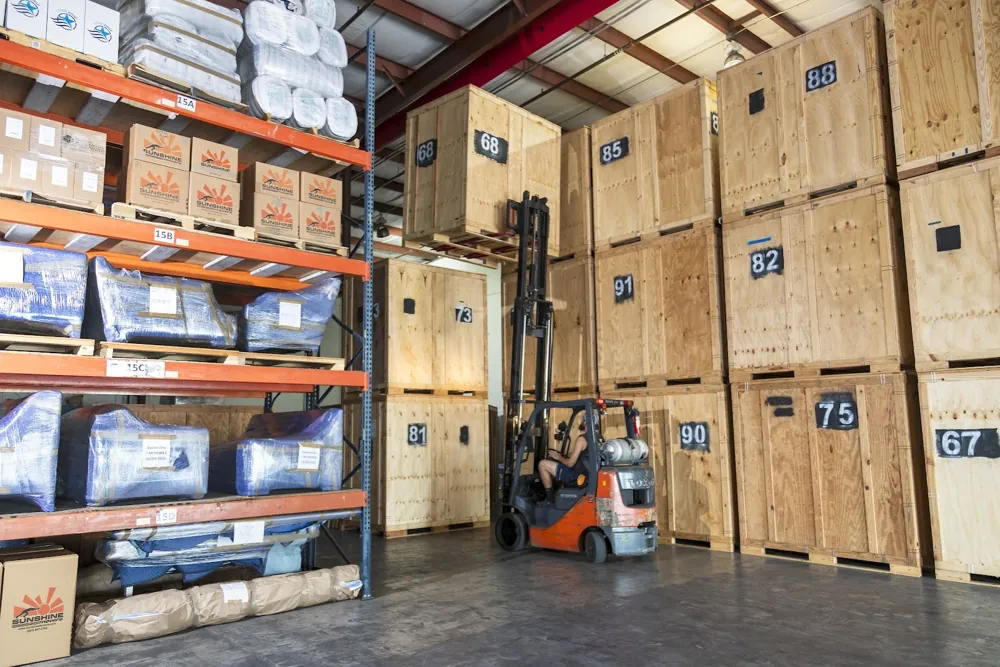
Secure office furniture storage typically includes restricted access, controlled custody, and monitored facilities. The most important question is who can physically access storage areas. Public-access environments introduce more variables. Controlled-access warehouse storage reduces unknown traffic and reduces the risk of accidental contact or unauthorized handling.
Security also includes protection from damage. A secure storage plan should minimize unnecessary handling and keep furniture stable while it’s stored. Furniture should be prepared appropriately before storage so surfaces, edges, and components are protected during transport and placement.
Accountability is another essential layer. Businesses benefit from intake documentation and organized tracking so assets don’t become a mystery during the project. When storage is managed like logistics, it’s easier to plan redelivery and easier to maintain confidence that what went in will come back out in the condition you expect.
If you’re comparing options like business storage near me or commercial storage units, security should include more than locks. It should include a controlled process that keeps responsibility clear from pickup through storage and redelivery.
Can Items Be Stored Short-Term?
Yes, and short-term storage is one of the most common reasons businesses choose office furniture storage. Short-term storage can bridge gaps like a weekend move with a delayed occupancy date, a renovation phase that lasts a few weeks, or a staged relocation where furniture needs to be held until departments are ready to move in.
Short-term storage also helps in a situation many offices experience: the space is technically available, but not ready for furniture installation. Maybe flooring isn’t complete, paint isn’t finished, or the workspace needs final electrical and IT work. Storing furniture off-site prevents it from being moved around repeatedly or exposed to construction dust.
The most important thing about short-term storage is flexibility. Many businesses plan for a short window and then experience delays. A storage solution that can extend without disruption keeps your project stable even when the timeline changes.
Why FF&E Handling Makes Office Storage Smoother
FF&E handling is the difference between “we stored some desks” and “we managed a project.” When FF&E is handled professionally, furniture and related assets are treated as inventory that must remain protected, organized, and ready for deployment.
This matters for projects where new furniture arrives before the space is ready, or where a renovation requires large-scale removal of items. It also matters when multiple vendors are involved. A single, coordinated storage and handling plan reduces confusion, reduces touchpoints, and helps prevent the small mistakes that become expensive later, like missing hardware, scratched finishes, or broken components.
FF&E handling can also support staged delivery, where items are delivered in phases aligned with project readiness. Instead of overwhelming the site with everything at once, you can bring in what’s needed, when it’s needed. That approach can reduce downtime and keep the workspace safer during setup.
For office managers and facility teams, FF&E handling is often what transforms storage from a necessary inconvenience into a strategic advantage.
A Smooth Business Move Happens When Storage Is Part of the Plan
Office moves and renovations are easier when they’re treated like logistics, not improvisation. Office furniture storage and FF&E handling create a controlled middle step that protects your assets, reduces downtime, and keeps your project flexible when timelines change. Instead of shuffling furniture around job sites or relying on self-managed commercial storage units that add extra handling, a full-service storage approach provides pickup, protection, secure warehousing, coordinated delivery, and—when needed—installation planning that helps your team return to work faster.
If your office is relocating, remodeling, or managing phased project milestones, the right storage plan can be the difference between disruption and a smooth transition. The goal is simple: keep furniture safe, keep the move organized, and keep your business moving forward.
Contact Sunshine Movers for your Storage Needs


