.webp)


.webp)

Hotel Additions and Renovations Run on FF&E Timelines the Property Cannot Absorb
Hotel and resort projects across Sarasota, Bradenton, Longboat Key, Siesta Key, Lido Key, Anna Maria Island, and the broader Tampa Bay corridor almost always face the same FF&E timing problem, whether the project is a new tower, a room addition, a full property refresh, a soft-goods refresh, or a phased renovation moving floor by floor. Furniture, fixtures, and equipment are ordered against a design package and a projected opening date, container ships and freight carriers deliver on their own schedule, and the property has neither the back-of-house square footage nor the operational bandwidth to stage two hundred or four hundred or a thousand guestroom packages on site while the construction team is still finishing walls, flooring, casework, and mechanical work. The moment case goods, upholstery, casegood mirrors, lamps, artwork, in-room safes, minibars, bedding packages, and specialty pieces start arriving in ocean containers or trailer loads, the general manager, the director of engineering, and the project manager are all looking for somewhere to put them that is not the ballroom, the parking garage, or a guestroom that is supposed to be revenue-generating.
A local hospitality FF&E receiving and storage partner solves that problem cleanly. Instead of routing container loads and trailer freight to the property, the project routes every shipment to a professionally staffed commercial warehouse. The warehouse team receives each load, deconsolidates and inspects it, photographs and inventories every piece against the project and against the room, PO, or item number, and stores it in a climate-controlled and secure environment until the property is ready to install. When the construction schedule releases a floor, a wing, or an entire tower for FF&E installation, the warehouse delivers the exact inventory required for that phase, in the sequence needed for that phase, on the schedule the general contractor and the operator can actually accept. The property protects its guest revenue, protects its FF&E investment, and protects its opening or reopening date.
Hotel FF&E receiving and storage in Sarasota consolidates every furniture, fixture, and equipment shipment for a room addition, tower opening, or phased renovation into a single managed warehouse workflow. Vendors ship directly to the warehouse, each item is inspected and inventoried against the project by room number and purchase order, inventory is held in climate-controlled commercial storage until construction releases each phase, and final deliveries are scheduled floor by floor or wing by wing so that the property receives only what it can install on the day it can install it.
Consolidating Multi-Vendor Shipments Into One Managed Workflow
A hospitality FF&E package for a new room addition or a tower opening in the Sarasota market typically involves anywhere from forty to well over a hundred vendors shipping into the project over a six- to eighteen-month window. Case goods and casegood mirrors ship from domestic and offshore manufacturers on container schedules. Upholstery and seating ship from workrooms with variable lead times. Lighting arrives from specialty vendors that ship in dozens of individual cartons per room. Bedding packages, pillows, throws, and top-of-bed items arrive on their own timelines from hospitality textile suppliers. In-room safes, minibars, coffee equipment, and television mounts ship from OS&E vendors and equipment distributors. Artwork and mirrors arrive crated from art programs. Draperies and cubicle-mounted soft goods ship from workrooms after site measurements are confirmed. Bathroom fixtures, showerheads, and specialty accessories ship from plumbing distributors. Guestroom carpet, corridor carpet, and rug programs arrive on their own freight schedules from mill programs.
Trying to receive that flow at the property is operationally impossible for any hotel that is still running rooms while the addition or renovation is in progress. A commercial warehouse storage partner absorbs the flow instead. Every purchase order carries the warehouse's receiving address, the project code, and any additional reference the operator wants on the bill of lading. Container drayage, LTL freight, parcel deliveries, and white-glove hospitality carriers all deliver to the same dock. The warehouse deconsolidates containers on arrival, cross-checks manifests against the project PO log, inspects each carton for exterior damage before the driver leaves, and documents any freight exceptions while the claim window is still open. The property's project team receives receiving reports on the cadence the owner and operator prefer, which is typically a shipment-level report for high-value or damage-flagged loads and a weekly digest for routine parcel and case-goods flow.
That consolidation is one of the specific reasons hospitality developers, owner's representatives, and project managers use a local Sarasota hotel furniture storage partner instead of asking the general contractor to receive on site. The GC's job is to build the rooms, not to run a receiving dock, and every hour the GC spends managing freight is an hour that does not go into the schedule the owner is trying to hit.
Inventory Control by Room, PO, and Phase
The value of a professional hotel FF&E receiving program is not just that the warehouse holds the inventory. It is that the warehouse knows exactly what it holds, where each piece belongs, and when each piece is supposed to release. Every item received against a hospitality project is tagged with a unique identifier at the dock and linked in the warehouse inventory management system to the project, the vendor, the purchase order line, the room number or room type, and the item description from the FF&E specification. Photographs, condition notes, hardware counts, and any freight exceptions are stored against that tag so that the entire project inventory is auditable at any point during storage.
That level of inventory control is what makes phased installation possible. When the project team says the fourth floor is ready to accept installation on a specific Monday, the warehouse can pull exactly the rooms on that floor, in the room-type mix the specification requires, with every piece the room needs and no piece the room does not need. Nothing is pulled from a pile in the ballroom. Nothing is guessed. Nothing is missing on install day because the receiving report from six months earlier flagged a short-shipped nightstand that has since been reordered and received. Owner's representatives, purchasing agents, and installers all work from the same live project inventory, and freight claims that need to be resolved with the manufacturer are backed by dated photographs and dock receipts rather than a memory of what showed up on which pallet.
Phased Delivery That Matches Construction and Installation Reality
Hotel and resort projects rarely install FF&E in a single push. New towers open floor by floor. Room additions install wing by wing. Renovation projects rotate through the property in phases so that the operator can keep a portion of the inventory revenue-generating during the work. Every one of those patterns requires a managed storage partner that can release inventory in the exact configuration the installer needs on the exact day the installer can accept it, without releasing anything that is not needed yet.
A commercial warehouse built for hospitality FF&E work handles phased release as a standard workflow. When the project team confirms an installation window for a floor, a wing, or a tower section, the warehouse builds a load list against the room-by-room specification, sequences the trucks so that pieces come off in placement order, and dispatches uniformed white-glove crews to move inventory into the guestrooms without damaging corridors, elevator interiors, guestroom door frames, or newly finished flooring. Floor protection, corner guards, and elevator padding are standard. Crews unwrap and inspect each piece one last time as it enters the room, level and align case goods, place seating and top-of-bed items, and remove every scrap of packaging before they leave. Anything that needs to remain in the warehouse for a later phase stays exactly where it was, protected and inventoried, until its own release date lands.
That phased approach is also what allows the property to absorb the construction delays that every hotel project experiences. When a floor slips two weeks because of a mechanical inspection or a millwork punch list, the warehouse simply holds the inventory for that floor another two weeks and releases the floor that is actually ready first. The FF&E schedule flexes with the construction schedule instead of forcing the operator to pay overtime installation crews to stage a floor that is not really ready.
Protecting the Opening Date, the Investment, and the Guest Experience
A hotel or resort project in the Sarasota market carries three risks that a professional FF&E receiving and storage program is specifically built to eliminate. The first risk is a delayed opening or reopening because FF&E arrived faster than the property could stage it and got damaged, lost, or misplaced. The second risk is a wasted portion of the FF&E investment because freight damage was discovered too late to file a claim, because pieces were stored in an environment that degraded them, or because inventory disappeared into an unmanaged pile of pallets. The third risk is a compromised guest experience on opening day because the installation was rushed, the wrong pieces landed in the wrong rooms, or punch list items were still being addressed while the first paying guests were checking in. Every one of those risks is directly reduced by consolidating receiving, storage, and phased delivery into one accountable local partner.
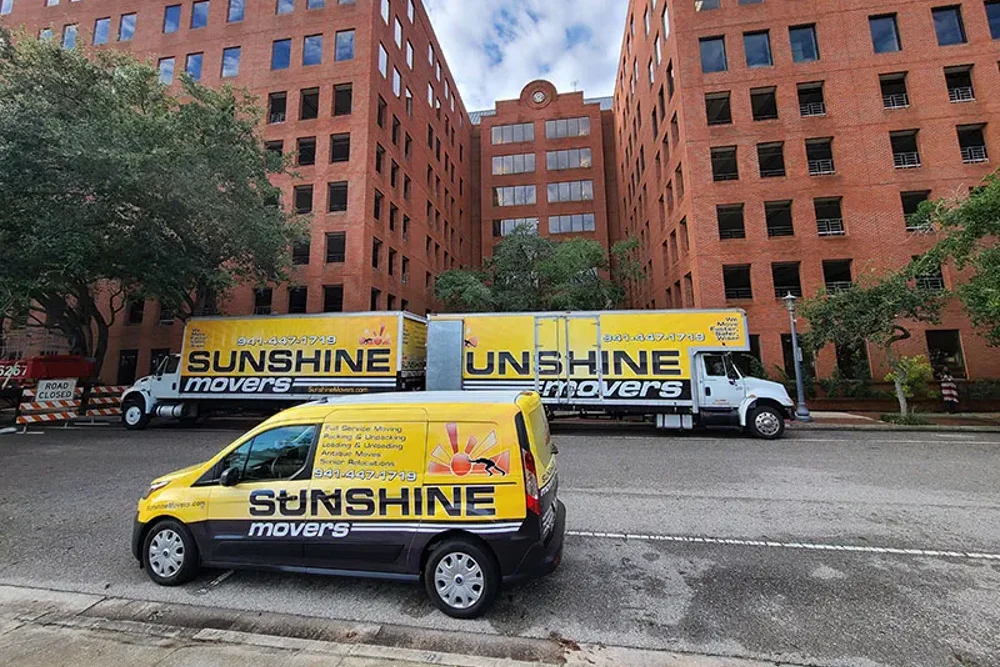
Sarasota Sunshine Movers supports hotels, resorts, hospitality developers, owner's representatives, and project managers across Sarasota, Bradenton, Longboat Key, Lido Key, Siesta Key, Anna Maria Island, and the broader Tampa Bay region with commercial warehouse storage, hospitality FF&E receiving, climate-controlled hotel furniture storage, room-level inventory control, and phased white-glove final delivery designed around the way hotel additions, tower openings, and renovation projects actually run. Properties preparing for a new room addition, a floor-by-floor renovation, a soft-goods refresh, or a full tower opening can request a quote today and stand up the receiving workflow in time to update ship-to addresses on every open purchase order before the first vendor shipment leaves the manufacturer.


