.webp)


.webp)

When the Furniture Arrives Before the House Is Ready
Custom home projects in Sarasota, Bradenton, Longboat Key, Siesta Key, Lakewood Ranch, and Anna Maria Island almost always run on two timelines that do not match. Construction runs on one clock, and furniture, fixtures, and equipment run on another. Framing, drywall, cabinetry, tile, millwork, and final trim happen on the builder's schedule and the trades' availability, while sofas, dining tables, lighting, rugs, appliances, plumbing fixtures, and specialty pieces ship on lead times set by vendors and freight carriers all over the country and, increasingly, all over the world. When those two clocks do not align, and they rarely do, the beautiful pieces that were ordered six months ago start showing up long before the house is actually ready to receive them.
Builders and interior designers know this pattern well. Custom sectionals arrive from North Carolina while the home still has open ceilings. Lighting packages ship from Europe while the drywall crew is on site. Appliance packages release from the distributor the moment the kitchen tile is set, whether or not the countertops are in. Homeowners field freight calls they were not expecting and start looking for garage space, spare bedrooms, or a friend with a big shed. None of those improvised solutions protect finished goods well, and every one of them creates the risk that a freight-damaged piece will not be discovered until it is far too late to file a claim.
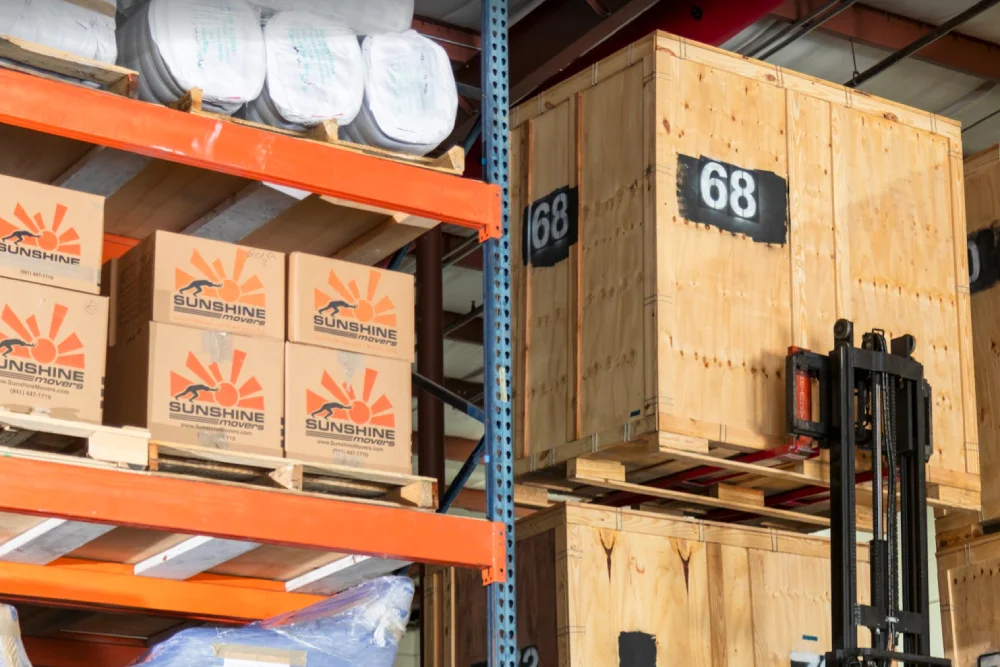
Managed FF&E storage inside a commercial warehouse solves that problem cleanly. Instead of routing every early shipment to the job site or to the homeowner's temporary residence, the builder or designer routes it to a professionally staffed warehouse that receives, inspects, inventories, and stores everything until the home is truly ready. When construction reaches the point where furniture can be installed without risk, the warehouse team stages a coordinated delivery. The custom home is finished on the builder's timeline, and the FF&E arrives clean, protected, and ready to place, no matter how far apart those two timelines ran during the project.
FF&E storage for a custom home project routes every early-arriving furniture, fixture, and equipment shipment to a managed commercial warehouse instead of the construction site. The warehouse receives and inspects each item, photographs and inventories it against the project, holds it in a climate-controlled environment for as long as construction requires, and then releases pieces for staged or consolidated delivery once the home is ready to accept installation.
What Custom Home Teams Actually Store
The scope of FF&E that flows through a custom home project is broader than most homeowners expect, and the commercial storage program has to be built to hold all of it. Living room and family room upholstery, dining tables and chairs, bedroom sets and mattresses, outdoor furniture for lanais and pool decks, area rugs, art and mirrors, decorative lighting, custom draperies and workroom-fabricated soft goods, kitchen and bath plumbing fixtures held for the plumber, appliance packages held for the appliance installer, tile and stone overage, hardware, and specialty items such as wine storage inserts, home gym equipment, and outdoor kitchen components all move through the same receiving door on a large project. A capable commercial storage partner handles each category with the racking, wrapping, staging, and climate protection that category requires, rather than treating everything as generic freight.
That range matters because the pieces that get damaged in an improvised storage situation are almost always the ones that were not treated correctly for their category. Upholstery mildews in un-conditioned garages. Leather dries out in hot Florida attics. Wood veneers crack when humidity swings. Lighting crystals chip when boxes are stacked incorrectly. Rugs crush when they are stored flat under other pallets. Plumbing fixtures scratch when boxes are opened by the wrong trade at the wrong time. A commercial warehouse built for FF&E work is designed to keep each of those categories in the environment and orientation that preserves them, which is one of the quiet reasons managed storage almost always costs less than the damage claims and reorders that come from storing things badly.
How the Storage Program Works from Order to Install
The workflow for a custom home FF&E storage program starts at the purchase order and ends on install day. As the designer or builder places each order, the ship-to address on the purchase order is set to the receiving warehouse rather than the job site or the client's home. The warehouse team is notified in advance about what is coming, from which vendor, on which purchase order, and with which project code, so that receiving clerks are ready to match arrivals against expectations when the trucks appear at the dock.
When each shipment arrives, the receiving team counts cartons against the bill of lading, notes any exterior damage before the driver leaves, and then performs a deeper inspection appropriate to the item. High-value upholstery and case goods are uncrated in a dedicated inspection area, photographed under consistent lighting, and examined for concealed damage while the freight claim window is still open. Small parts, hardware bags, remotes, and glass are inventoried against the item. Everything is then re-wrapped or covered and moved to the project's dedicated staging area inside the warehouse. Every piece receives a unique tag that links it to the project, the vendor, the purchase order line, and the item description, and photographs and condition notes are stored against that tag in the warehouse inventory system.
Inventory reporting keeps builders and designers in control while pieces accumulate. Some project teams want a receiving notification for every shipment. Some want a weekly digest across all active projects. Some want on-demand access to a live project inventory they can consult before a client meeting or a coordination call with the general contractor. All of those cadences are reasonable, and a capable commercial warehouse storage partner should be able to accommodate the reporting rhythm the project team prefers, so that the homeowner and the design team see a single, accurate picture of what has landed and what is still outstanding.
Staged Releases and Coordinated Install Day
A managed storage program does not have to release everything at once. On many custom home projects, the appliance package needs to be released to the appliance installer while cabinets and countertops are still being finished, plumbing fixtures need to be released to the plumber during rough-in and again during trim, and specialty lighting needs to be released to the electrician before drywall closes up a coffered ceiling. Meanwhile, the finished furniture, rugs, art, and accessories need to stay wrapped and protected until the very end. A commercial storage program built for FF&E work can handle both patterns on the same project, releasing trade-required items on the schedule the general contractor needs while holding the finish package intact for a single install day at the end.
That final install day is where the value of the whole program becomes visible to the homeowner. When the home is truly ready, meaning trades are out, floors are protected, HVAC is stable, and the interior is clean, the warehouse team builds a load list that matches the install plan. Trucks are loaded in reverse order of placement so that pieces come off in the sequence they will be installed. Uniformed white-glove crews protect floors and door jambs, move furniture into position based on the designer's floor plan, unwrap and inspect each piece one last time, and remove every scrap of packaging before they leave. The homeowner walks into a finished home rather than a construction site with furniture stacked in the middle of the great room, and the design team gets a clean canvas to complete final styling.
Making FF&E Storage Part of the Project Plan From Day One
The custom home projects that finish cleanly are almost always the ones where FF&E storage was treated as a planned line item from the beginning rather than as an emergency fix at the moment the first sofa showed up on the wrong week. Builders who write a receiving address into every furniture purchase order at the start of a project, and designers who route every vendor to that same address, spend the rest of the build focused on their actual work instead of chasing freight problems on behalf of the homeowner. The warehouse becomes the quiet backstop that keeps early arrivals safe, keeps trade-required items ready for release, and keeps the finished package pristine for install day.
Sarasota Sunshine Movers supports custom builders, interior designers, and homeowners across Sarasota, Bradenton, Longboat Key, Siesta Key, Lakewood Ranch, Anna Maria Island, and the broader Tampa Bay region with commercial warehouse storage, FF&E receiving, white-glove storage, and coordinated final delivery designed around the way custom home projects actually run. Project teams that want to eliminate garage stacking, protect their finish package, and turn install day into a single choreographed event can build a receiving and storage relationship that scales cleanly from the first purchase order to the final walkthrough.


