.webp)


.webp)

If you’ve ever stored furniture before, you know the biggest worry usually isn’t the storage building itself. It’s what happens before your belongings even get there. Most families and downsizers aren’t losing sleep over the idea of a couch sitting still for a few weeks. They’re worried about the parts that involve movement and handling. Will the wood get scratched? Will the corners get dented? Will the upholstery snag? Will someone stack something heavy on top of a delicate piece? Those fears are valid, because most damage doesn’t occur while items are quietly sitting in storage. Damage happens during transitions: wrapping, lifting, loading, unloading, and the small moments where a piece bumps a doorway or rubs against another item.
That’s why the preparation process matters so much. At Sunshine Movers, storage is an extension of professional moving and logistics, not a self-storage experience where responsibility shifts after a handoff. Sunshine Movers provides professionally managed, secure warehouse storage with controlled access, inventory awareness, and chain of custody from pickup to storage and final delivery. There are no drive-up units and no public-access storage areas. The same professional mindset that protects your items during a move is the mindset that protects them before they ever go into storage.
This article walks through how furniture is typically prepared for secure storage warehouse environments, what materials are used, why preparation reduces damage, how fragile items are handled, and what mistakes most often cause problems when storage is rushed or DIY.
Why “Preparation” Is the Real Secret to Safe Storage
People often assume that storage safety is mainly about the building: cameras, locks, and climate. Those factors matter, but they don’t address the biggest threat to your furniture, which is physical handling. A beautiful dining table can be damaged by a single careless drag across a threshold. A leather sectional can be torn by a sharp corner of a box during a rushed load. A dresser can lose a handle or a leg when it’s not stabilized properly. These issues aren’t solved by a secure door after the fact. They’re prevented by correct wrapping, padding, protection, and loading from the start.
Professional preparation does two things at once. It protects the item’s surfaces and structure while it’s in motion, and it also makes the item easier to handle safely. When furniture is wrapped and padded correctly, movers have safer grip points, corners are buffered, and the pieces can be staged and stacked in a way that reduces pressure and friction. In other words, preparation doesn’t just “cover” furniture. It actively reduces the chance of damage during the moments that matter most.
Is Furniture Wrapped Before Storage?
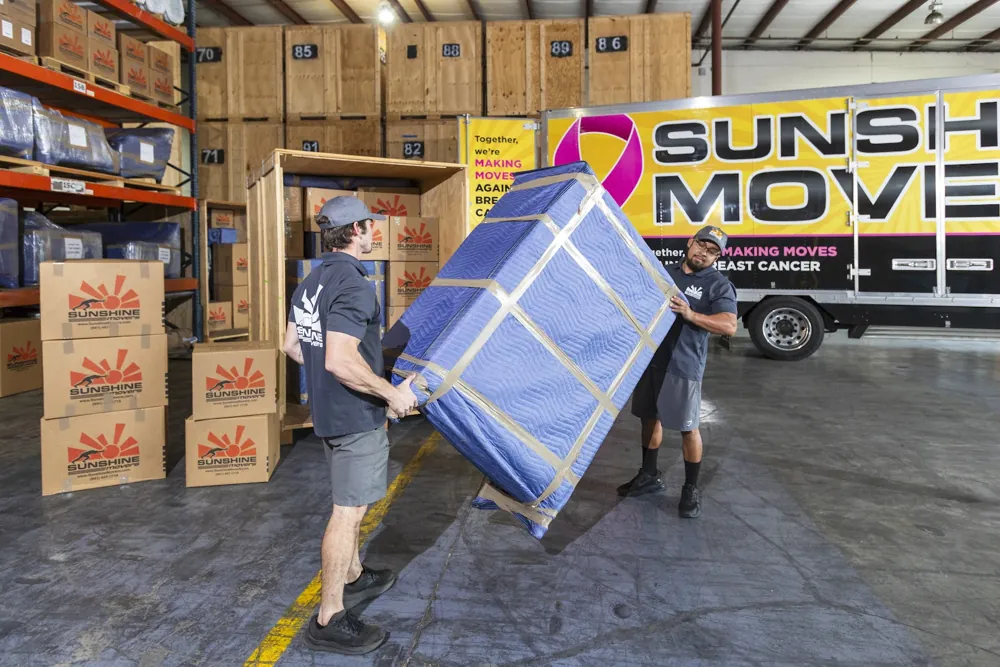
In a professional warehouse storage process, yes, furniture is typically wrapped before storage because the period before an item is placed is when it is most vulnerable. Sunshine Movers’ approach includes professional protection and handling as part of the storage workflow. Furniture remains professionally pad-wrapped, which is a major differentiator from DIY storage scenarios where people often remove pads to avoid extra costs or because they’re worried about losing them in a public-access environment.
Wrapping and padding serve different purposes, and good preparation usually uses both. Padding, such as thick moving blankets, creates a cushioned barrier that absorbs impact and protects finishes. Wrapping, such as stretch wrap, helps secure the padding in place and adds a layer that reduces scuffing and keeps pieces clean. For certain items, additional protective layers can be used around corners, glass, or fragile surfaces to prevent pressure points.
This matters even if you consider yourself careful. A single bump on a stairwell wall can mar a finish. A brief rain shower while loading can introduce moisture into fabric or wood. Preparation creates a protective buffer against the unpredictable.
What Materials Are Used to Protect Furniture for Storage?
When you picture “wrapping,” it’s easy to think of one kind of plastic and call it done. In reality, professional storage preparation often combines several materials to address different risks. The goal is to prevent scratching, denting, rubbing, moisture exposure, and shifting during transport and intake.
Thick furniture pads are a core piece of protection for items with finished surfaces and delicate edges. They cushion impacts and reduce abrasion, particularly for wood furniture, lacquered finishes, and pieces with decorative trim. Stretch wrap is commonly used to keep pads secured and to protect against dust and surface scuffs. It can also help keep drawers and doors closed so they don’t swing open during lifting, which is one of the most common causes of chipped edges.
For glass, mirrors, and other breakables, protective wrap and reinforced packing approaches are typically used so the item’s most vulnerable areas are stabilized. Corner protectors or added padding on edges helps prevent cracks and chips where pressure tends to concentrate. For upholstered furniture, protection focuses on keeping fabric clean, preventing snags, and shielding upholstery from friction or contact with rough surfaces.
The “best” materials aren’t just about being thicker. They’re about being applied correctly. Proper protection is a system, and each piece works together. Padding without being secured can slide. Wrap without padding can still allow dents and pressure marks. Professional preparation uses both in a way that keeps protection stable during movement.
Does Preparation Really Reduce Damage?
It does, and the reason is simple: preparation reduces the number of “danger moments” where a piece can be harmed. A protected surface is less likely to scratch when it brushes a doorway or another item. Padded corners are less likely to dent during a tight turn. Stabilized doors and drawers are less likely to swing and chip the frame. Properly wrapped legs and arms are less likely to catch and snap under strain.
Preparation also supports safer loading, which is just as important. When items are protected and structured correctly, they can be staged and placed in ways that reduce movement and shifting. Movement is the enemy during transport. The more a piece can shift or rub, the more damage accumulates even if nothing dramatic happens. Proper preparation reduces that micro-movement and friction, which is where many “mystery scratches” come from.
This is one of the reasons Sunshine Movers positions storage as professional logistics rather than a public self-storage experience. When storage is managed end-to-end, furniture can be protected once, handled consistently, and kept under controlled custody. That continuity matters because it reduces unnecessary rehandling and rewrapping, which are common points of failure in DIY scenarios.
Are Fragile Items Handled Differently?
Yes, and they should be. One of the biggest misconceptions about storage is that all items can be treated the same as long as they’re “wrapped.” Fragile items require a different approach because the consequences of pressure, vibration, and stacking are much higher.
Glass-top tables, framed artwork, mirrors, lamps, antiques, and certain electronics need handling that prioritizes stability, edge protection, and correct positioning. The goal isn’t just to keep them from being scratched. The goal is to prevent flexing, pressure points, and impact that can cause cracks and breaks. Many fragile items also require careful decisions about orientation, such as storing upright rather than flat, or ensuring nothing rests against sensitive surfaces.
Delicate furniture finishes also fall into this category. High-gloss pieces, vintage wood, and ornate trim can be more vulnerable to rubbing or pressure marks. Upholstered pieces with light fabric, textured weaves, or performance materials may need protection that avoids abrasion and snagging.
The key principle is that fragile items aren’t simply “packed more.” They’re handled with a more deliberate plan that accounts for how they move, where they sit, and what they might contact. Professional movers are trained to see those risk points and protect them before the item ever enters the storage environment.
Secure Warehouse Storage Isn’t Just Safer, It’s More Accountable
Homeowners often evaluate storage based on whether it’s “secure,” and security absolutely matters. But when families and downsizers are worried about scratches and dents, the deeper concern is accountability. In public-access self-storage settings, responsibility can become unclear once multiple unknown individuals have access and items are moved in and out over time.
Sunshine Movers’ storage is professionally managed secure warehouse storage with controlled access. Only authorized personnel are permitted in storage areas, and not all employees have access. Camera monitoring supports the security model, but the bigger difference is the chain of custody. One company remains responsible from pickup to storage to final delivery. That means your furniture isn’t passing through multiple hands and multiple environments. It stays within a controlled system designed for careful handling.
That end-to-end approach is what many people mean when they search for white glove storage. It’s not just about being careful in the moment. It’s about having a complete, professional process that reduces risk at every step, from preparation to loading to storage and redelivery.
The Most Common Mistakes That Cause Storage Damage
Most storage damage is preventable, and it usually comes from a handful of mistakes that show up when people rush, improvise, or rely on trial-and-error. One common mistake is skipping padding and relying on thin plastic wrap alone. Plastic can keep a surface clean, but it does not protect against dents, edge impacts, or pressure points. Another common mistake is failing to secure doors, drawers, and moving parts. A drawer that slides open during a lift can chip a frame or throw off balance, leading to drops and impacts.
Overstacking is another issue. When people treat storage like a game of “make it fit,” heavy items end up pressing on delicate furniture or upholstered pieces. That pressure can warp wood, crush cushions, and cause long-term structural stress. Disassembly mistakes can also cause problems, especially when hardware is lost, legs are removed incorrectly, or pieces are reassembled without proper support.
Improper lifting and carrying is a major cause of damage, too. Dragging furniture across floors, pivoting too tightly through doorways, and setting pieces down on uneven surfaces all create stress points where scratches and dents happen quickly. Even well-meaning helpers can cause damage simply because they don’t have the training to anticipate weight shifts and clearance angles.
Finally, extra handling itself is a mistake. Every time furniture is moved, loaded, unloaded, and moved again, risk rises. This is why professional warehouse storage that’s integrated with moving is so valuable. If you can reduce the number of times items are handled, you reduce the opportunities for damage.
Dock-Level Loading and Fewer Touches: A Quiet Advantage Most People Miss
Even with perfect wrapping, damage risk rises with every extra transfer. That’s why Sunshine Movers’ warehouse process matters. In a logistics-style warehouse, trucks pull directly onto a loading dock and items move straight from the truck into the warehouse. This reduces the long carries, steep ramps, elevators, and narrow hallways that often show up in self-storage scenarios.
Less distance and fewer obstacles mean fewer touches, and fewer touches means fewer opportunities for bumps and friction. It also speeds up intake, which reduces the amount of time items spend in transitional spaces where weather and traffic can introduce additional risk. Designed like a logistics facility, not a public storage unit, dock-level loading supports safer handling for large pieces and high-value items that require care.
What mistakes cause the most damage when storing furniture?
Common mistakes include skipping padding, using thin plastic wrap alone, not securing drawers and doors, overstacking heavy items on delicate pieces, dragging furniture across floors, rushing through tight spaces, and increasing handling by moving items multiple times in and out of storage.
Safe Storage Starts Before the Warehouse Door Ever Closes
If you’re evaluating storage, it’s smart to look beyond the word “secure” and ask a more practical question: how will my furniture be handled and protected before it ever goes into storage? The best storage outcomes come from professional preparation, careful handling, and a system that reduces unnecessary touchpoints.
Sunshine Movers’ secure storage warehouse is designed to do exactly that. With controlled access, professional pad-wrapped protection, inventory awareness, and a chain of custody from pickup through final delivery, storage becomes a calm, managed extension of your move rather than a DIY juggling act. For families and downsizers who want fewer worries about scratches, dents, and mishandling, that professional process is what turns storage into a genuinely protective solution.
If you’re planning a move, a downsizing transition, or a timeline gap between homes, Sunshine Movers can help you create a storage plan that keeps your belongings protected from day one and ready for a smooth delivery when you’re ready.


