.webp)


.webp)

If you’ve ever stepped outside in Sarasota and felt the air wrap around you like a warm blanket, you already understand the core problem with storage in Florida: moisture is always in the conversation. Florida’s heat is intense, but it’s the combination of heat and humidity that quietly does the most damage to stored furniture and household items over time. And the tricky part is that the damage often starts slowly, then suddenly becomes obvious when it’s too late to reverse.
Most homeowners begin thinking about storage when life gets busy. A renovation takes longer than planned. A closing date shifts. A seasonal resident heads north. A downsizing timeline overlaps with selling a home. In those moments, “storage” sounds simple—until you consider what Florida conditions can do to wood, fabric, leather, paper, photos, electronics, and anything else that reacts to moisture in the air.
That’s why so many people search for climate controlled storage, and why “climate controlled storage Sarasota” is such a common phrase among Florida homeowners who want to protect what they’ve invested in. The right storage plan isn’t just about space. It’s about environmental stability, professional handling, and reducing risks that are unique to our region.
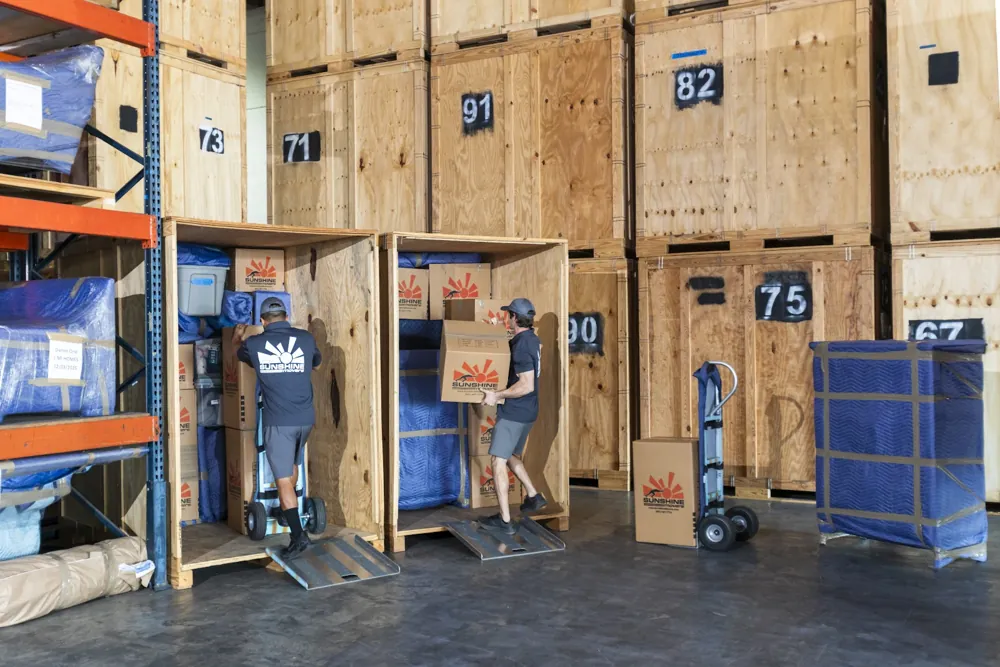
Sunshine Movers approaches storage as an extension of moving and logistics, not self-storage. There are no drive-up units and no customer-access storage areas. Your items remain under controlled custody from pickup through storage and final delivery, inside a professionally managed warehouse environment designed for accountability and protection.
Why Florida Storage Is Different Than “Anywhere Else”
Florida storage is different because humidity is not an occasional factor—it’s a constant background condition. In many parts of the country, a garage or non-climate-controlled unit might be “good enough” for short periods. In coastal Florida, moisture behaves differently. Even when your belongings aren’t directly wet, the air itself can carry enough moisture to be absorbed by materials over time.
Furniture and household goods are full of hygroscopic materials, which means they naturally take in and release moisture as the surrounding air changes. Wood expands and contracts. Fabrics can trap moisture. Leather can dry out, then reabsorb humidity and become tacky. Cardboard and paper soften and ripple. Metal hardware and springs can begin to corrode. When temperature swings are layered on top of high humidity, the risk grows because warm air holds more moisture and can create condensation when it cools on certain surfaces.
Florida also adds one more complication: you often don’t notice the danger right away. A piece can look fine for weeks, even months, while changes happen internally. The first time you might realize there’s an issue is when a drawer sticks, a tabletop feels slightly uneven, a musty odor appears, or a once-crisp upholstered piece feels damp and heavy.
In other words, Florida storage isn’t just “hot.” It’s a long-term moisture management challenge.
What Heat and Humidity Actually Do to Furniture Over Time
Humidity affects furniture in ways that feel almost personal because it targets the materials you care about most. Wood is one of the biggest examples. Solid wood can swell as it absorbs moisture, which can cause doors and drawers to stick, joints to loosen, and veneers to lift. Engineered wood and particleboard can be even more vulnerable because once they swell, they don’t always return to their original shape. That’s when you see bubbling, warping, soft edges, or a subtle “pillow” effect on flat surfaces.
Upholstery and cushions also respond to moisture. Fabric can retain humidity, creating a friendlier environment for mildew. Cushions can trap moisture deep inside, especially if they were stored with any residual dampness from cleaning, spills, or even humid air exposure during a rainy moving day. Over time, musty odors can develop and become difficult to remove because they’re not just on the surface.
Leather has its own Florida story. Heat and humidity can cause leather to feel sticky, soften in an unpleasant way, and develop mildew if airflow is poor. If leather alternates between drying out and reabsorbing moisture, it can crack or become uneven in texture. The result is a piece that looks aged before its time, even if it was in “safe” storage.
Metal components don’t love Florida either. Bed frames, lamp bases, springs inside upholstered pieces, and hardware on dressers can begin to corrode in damp environments. Rust often starts as tiny spots that look cosmetic, then spreads and stains surrounding materials.
Even items that seem “tough,” like plastic bins or sealed containers, can develop issues if moisture is trapped inside. Mold and mildew don’t require a flood; they require humidity, organic material, and time.
Which Household Items Are Most Affected in Florida Storage
Some items react quickly in humid conditions, and others degrade slowly until you suddenly notice a problem. Furniture made of wood, especially pieces with veneers, glued joints, or a high-gloss finish, tends to show humidity stress over time. Upholstered pieces, mattresses, rugs, and linens can absorb moisture and develop odor or mildew when air circulation is limited.
Paper-based items are also high risk. Books, documents, photographs, and cardboard boxes can warp, soften, stick together, or develop spotting. Artwork can be affected as well, especially canvas, framed prints, and pieces with paper backing or organic adhesives.
Electronics and appliances can be impacted by moisture in subtle ways. Corrosion can occur on connectors and internal components, and condensation risk rises when temperature fluctuates. Musical instruments, particularly those made of wood, are famously sensitive to humidity swings and can warp, crack, or go out of tune.
If it’s valuable, sentimental, or hard to replace, it deserves an environment that takes Florida’s moisture reality seriously.
How Fast Can Damage Occur?
This is the question most homeowners ask after they’ve already felt the pressure of a timeline. The honest answer is that damage can begin quickly, but noticeable damage depends on conditions and the item.
If an item goes into storage already damp, or if it’s stored in an environment with poor airflow and high humidity, mildew and odor can begin to develop surprisingly fast. Some materials can start showing early signs in days. Wood movement can happen gradually and become noticeable over weeks. Metal corrosion can begin as small spots and grow over months. Paper items can ripple and soften steadily, then become brittle or stuck together over time.
The bigger issue is that Florida storage damage often isn’t one dramatic event. It’s a slow drift away from “like new” that becomes obvious when you retrieve the item and realize it doesn’t feel, smell, or function the same.
That’s why climate controlled storage is less about perfection and more about prevention. It creates stable conditions that slow or stop the chain reactions that lead to mold, warping, swelling, and corrosion.
Is Climate Control Always Needed?
Not every single item requires climate control in every situation, but Florida is one of the places where climate control becomes “the safe default” far more often than people expect. If you’re storing items for a short period and you know they are clean, fully dry, and not particularly sensitive, you may have more flexibility. But even short periods can become long periods when renovations run late or closings shift.
The more valuable the items, the more you should think in terms of risk management rather than best-case scenarios. Climate controlled storage is typically recommended when you’re storing wood furniture, upholstered pieces, leather, artwork, documents, photos, electronics, or anything you would be upset to find damaged. It’s also wise when you can’t predict how long storage will last, because in real life, timelines often extend.
Just as important as climate is how the storage is managed. A stable environment helps, but it’s not the only factor. Proper preparation, professional handling, and controlled custody matter because damage also happens during repeated moving and re-stacking. That’s where Sunshine Movers’ warehouse model makes a meaningful difference.
The Storage Decision Most People Miss: Managed Warehouse Storage vs. Self-Storage
Florida homeowners often start by comparing unit sizes and monthly rates, but those numbers don’t describe the real experience of storage. The bigger question is how many unknowns you’re willing to accept.
Self-storage is typically a public-access environment. Customers come and go, moving items through shared spaces. Responsibility becomes blurred the moment you’re given a key or access code because the storage provider can’t control who touches or rearranges items once the unit is in use. The storage operator also can’t control what other customers store nearby, which can introduce pest, odor, and moisture concerns depending on the facility and the habits of people around you.
Sunshine Movers offers professionally managed, secure warehouse storage, not self-storage. There are no drive-up units and no customer-access storage areas. Warehouse access is limited to authorized personnel, with camera monitoring throughout. Items are inventoried upon intake, and your belongings remain under Sunshine’s chain of custody from pickup through storage and final delivery. That custody matters because fewer handoffs means fewer opportunities for damage and far less stress for you.
A major differentiator that also protects your items is logistics-style dock-level loading. Trucks pull directly to a loading dock, and items move straight from the truck into the warehouse. That reduces long carries, ramps, elevators, and narrow hallways that increase handling risk. Fewer touches mean less risk and a faster, safer process, which is especially important for large furniture and high-value pieces.
Early Warning Signs That Stored Items Are at Risk
Most people wish they had a “humidity warning light” that turns on before damage happens. In reality, your belongings give clues when conditions aren’t ideal. A musty smell is one of the earliest signs that moisture is accumulating. Drawers or doors that suddenly feel tight can indicate wood swelling. Upholstery that feels damp or looks slightly discolored may be holding humidity. Metal hardware that shows tiny orange spots is often an early stage of corrosion. Paper that feels wavy, soft, or slightly stuck together is another signal that moisture has been present long enough to change the fibers.
These signs matter because they’re telling you the environment is pushing your belongings in the wrong direction. The longer the exposure continues, the harder it becomes to restore items to their original condition.
Store Smarter in Sarasota: Protection Is a Process, Not Just a Place
In Florida, protecting furniture in storage is about more than finding an empty space and shutting the door. Heat and humidity work slowly, and the damage they cause is often the kind you can’t fully undo. The safest storage plan accounts for Florida’s environment from the beginning, with stable conditions, professional preparation, and careful handling that minimizes unnecessary movement.
Sunshine Movers helps Sarasota homeowners take a more controlled, less stressful approach. Our storage is professionally managed warehouse storage, not self-storage, with no public access and full chain of custody from pickup to final delivery. Items are handled by authorized personnel, inventoried on intake, and moved through a dock-level logistics process designed to reduce handling risks. When climate controlled storage is the right fit for what you’re storing and how long you’re storing it, we can help you choose an approach that protects your belongings through Florida’s toughest conditions.
If you’re planning a renovation, managing a moving gap, downsizing, or simply trying to keep furniture safe while life changes, Sunshine Movers can help you build a storage plan that’s designed for Sarasota—not just for “storage” in theory.


